



Understanding Water Damage Claims as a Renter – What You Should Know

Written by Simon Edmonds, reviewed by Marco Andolfatto
Making a water damage claim with tenant insurance
This guide is part of our series on water damage and tenant insurance.
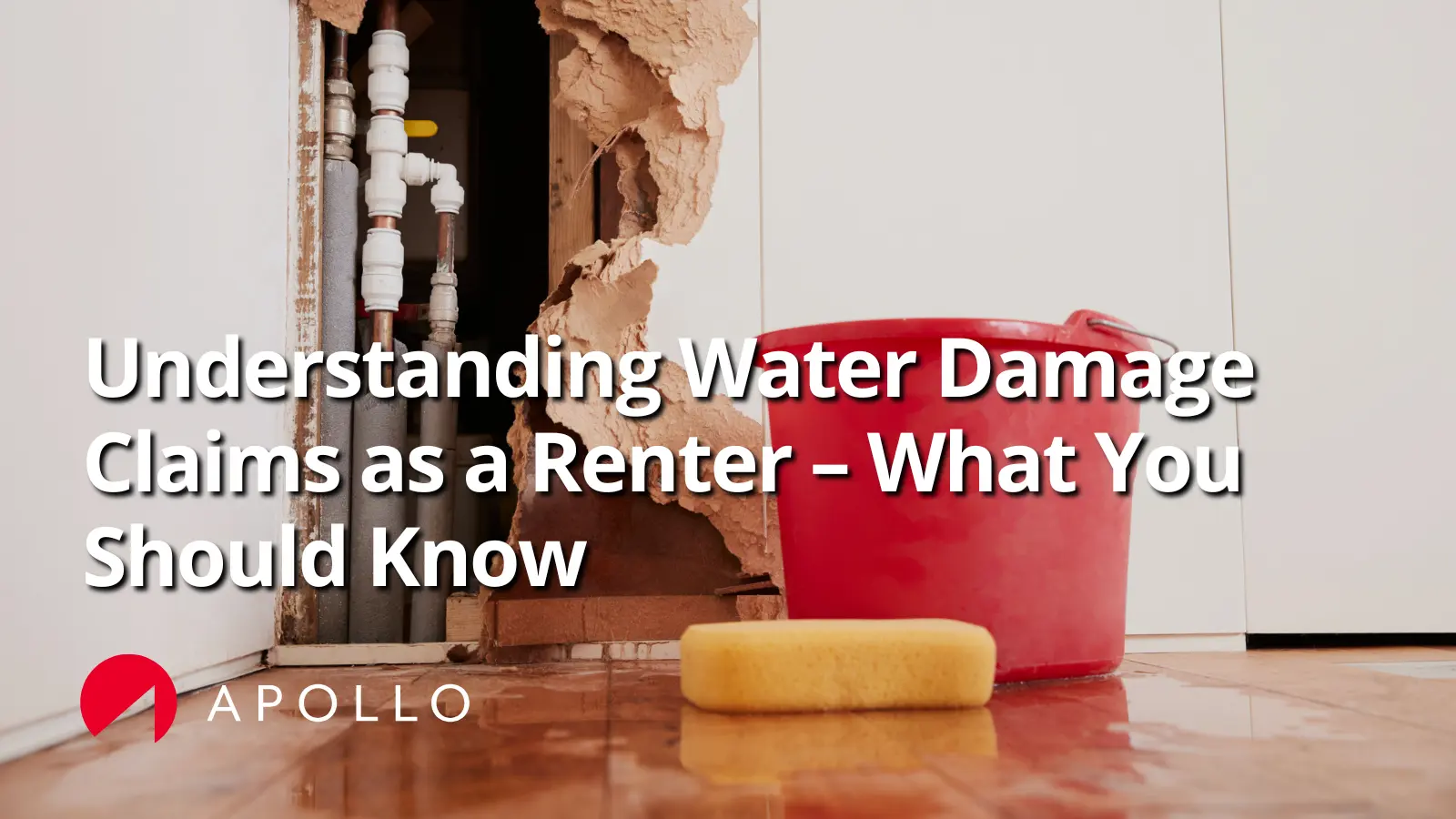
A slow drip behind a washing machine, a window that lets in more than expected during a storm, or a tap that’s left running for too long. Water damage can affect a home in a number of ways. Whatever the cause, the impact on your belongings and finances will usually be significant.
That’s where having a tenant insurance policy can provide financial support. In this guide, we’ll discuss what you need to know about making a claim after water damage in your apartment. From what counts as damage, to what falls outside your typical coverage, here’s everything to keep in mind.
Types of water damage renters might experience
Water damage refers to any physical damage to your personal belongings or the rental structure caused by water or moisture intrusion. That might include things like:
Damage to a renter's personal belongings. A leak from a ceiling or a window during heavy rain might affect furniture, electronics, or other personal items within the unit. Your personal belongings are usually covered by your tenant insurance, up to your policy limits.
An appliance-related leak. A washing machine hose, dishwasher, or water heater can develop a leak that affects flooring or belongings nearby.
Damage extending to a neighbouring unit. An overflowing sink or bathtub in one unit can sometimes lead to water making its way into the unit below or beside it. In some instances, your tenant insurance might also kick-in here.
Damage connected to building infrastructure. A pipe within the building's structure, rather than something inside the unit, may be the source of water affecting a rented space.
What might not be covered by tenant insurance?
Not every situation that involves water damage will be covered by tenant insurance. Coverage tends not to extend to every scenario in the same way, and can exclude:
Gradual issues. Natural issues that develop over time, such as long-term seepage or mold, may not always be covered. These are often treated differently from a sudden or accidental event. In a lot of cases, it might depend on what triggered the seepage or growth of the mold itself.
Flooding from external sources. Water entering from outside the building, such as from surface flooding or a sewer back-up, is sometimes addressed under separate insurance policies. It’s possible to upgrade a policy to include enhanced water coverage as part of your tenant insurance, but you may have to pay more for your premiums.
Damage resulting from a lack of maintenance. Issues connected to neglected upkeep may be treated differently from an unexpected event. If you notice an issue, but don’t report it, you could be held responsible.
Steps to filing a water damage claim
Mitigate further damage. Move your undamaged belongings to a dry area and, if safe to do so, safely turn off the water source. If you can take steps which help prevent the issue from worsening, without causing further damage, it’s best to do so. Also try to immediately let a building or property manager know, as they might be able to help mitigate the issue.
Document everything. Take clear photographs and videos of all damaged items, standing water, and the source of the leak prior to any cleanup. The more evidence you get at this stage, the more accurate outcome you’re likely to have for a claim.
Notify your landlord. Contact your landlord or property management in writing (via email or an official property management portal) to let them know what happened. They are usually required to begin professional assessments and remediation promptly to maintain a habitable environment, if that’s still possible.
File your claims. Contact your tenant insurance provider to start a claim for your personal property. They should be able to guide you through the steps of the claims process from there, offering updates as your claim progresses. Remember, each provider will have their own set of steps and timelines.
Tips for filing a water damage claim
You can never guarantee a water damage claim is going to be successful. However, there are steps you can take to improve your chances
Build a digital inventory. Create a spreadsheet listing every single damaged item with its brand, model, and age. Collect as much detail as you can – the more precise your records, the more useful they'll be for a claims administrator.
Understand your policy type. There are two ways in which a tenant insurance policy tends to pay out. Those are Replacement Cost Value (RCV) and Actual Cash Value (ACV). RCV pays for a brand-new equivalent item, while ACV deducts depreciation based on age and condition.
Claim food spoilage. You might be able to include ruined groceries if a power outage from the water leak left your fridge without power, and food went off. If you still have them, check your latest grocery receipts for their value.
The information provided on this page is intended for general educational purposes only and does not constitute insurance advice, a recommendation, or an offer to sell insurance. Every individual's insurance needs are unique and depend on personal circumstances. We encourage you to consult with an independent licensed insurance broker in your province who can assess your specific situation and recommend appropriate coverage.
Originally published August 5, 2026, updated August 5, 2026
Back to APOLLO MagazineAbout the author

Simon Edmonds, Senior Writer
Tenant Insurance Starting at $13/month
The only tenant insurance provider with a Best Price Guarantee. Already have a policy or quote? We’ll beat the price. Guaranteed. Terms apply.
Get a free quote
4.7 rating
Tenant Insurance Starting at $13/month
The only tenant insurance provider with a Best Price Guarantee. Already have a policy or quote? We’ll beat the price. Guaranteed. Terms apply.
Get a free quote
4.7 rating
Relevant articles





Getting Insured is As Easy As 1 - 2 - 3

1
Tell us (very little) about yourself
Just tell us your address, your name, email and phone number. And that's it. We'll give you a price in less than a minute.

2
Pay online easily and securely
You can choose to pay monthly or save money by paying for the entire year in one easy payment.

3
Get your documents in your inbox - instantly
As soon as you complete your purchase, you'll find your proof of insurance and policy documents waiting for you in your inbox.
Get covered today - it couldn’t be easier
We’ve provided more than 1,000,000 quotes to Canadians just like you. Give it a try!