



Sewer Backup vs Flood Coverage - Why the Difference Matters for Renters

Written by Simon Edmonds, reviewed by Marco Andolfatto
Understanding the difference between sewer backups and flood coverage
This guide is part of our series on water damage and tenant insurance.
If your home is damaged by water, tenant insurance can often kick in to help you financially. It’s typically oriented around a renter's personal belongings and day-to-day living situation, covering what happens inside the unit rather than the building around it.
However, coverage under a basic tenant policy isn't always uniform from one insurer to the next. And all types of water damage don’t necessarily come included by default, which can leave a gap between what a policy contains and what a tenant might assume they’re covered against. Sewer backup and overland water are two types of scenarios that often fall into that gap, and each tends to be treated somewhat differently.
In this guide, we’ll be discussing both. From how they differ, to their impact on your tenant insurance, here’s what you need to know.
Sewer Backup Coverage
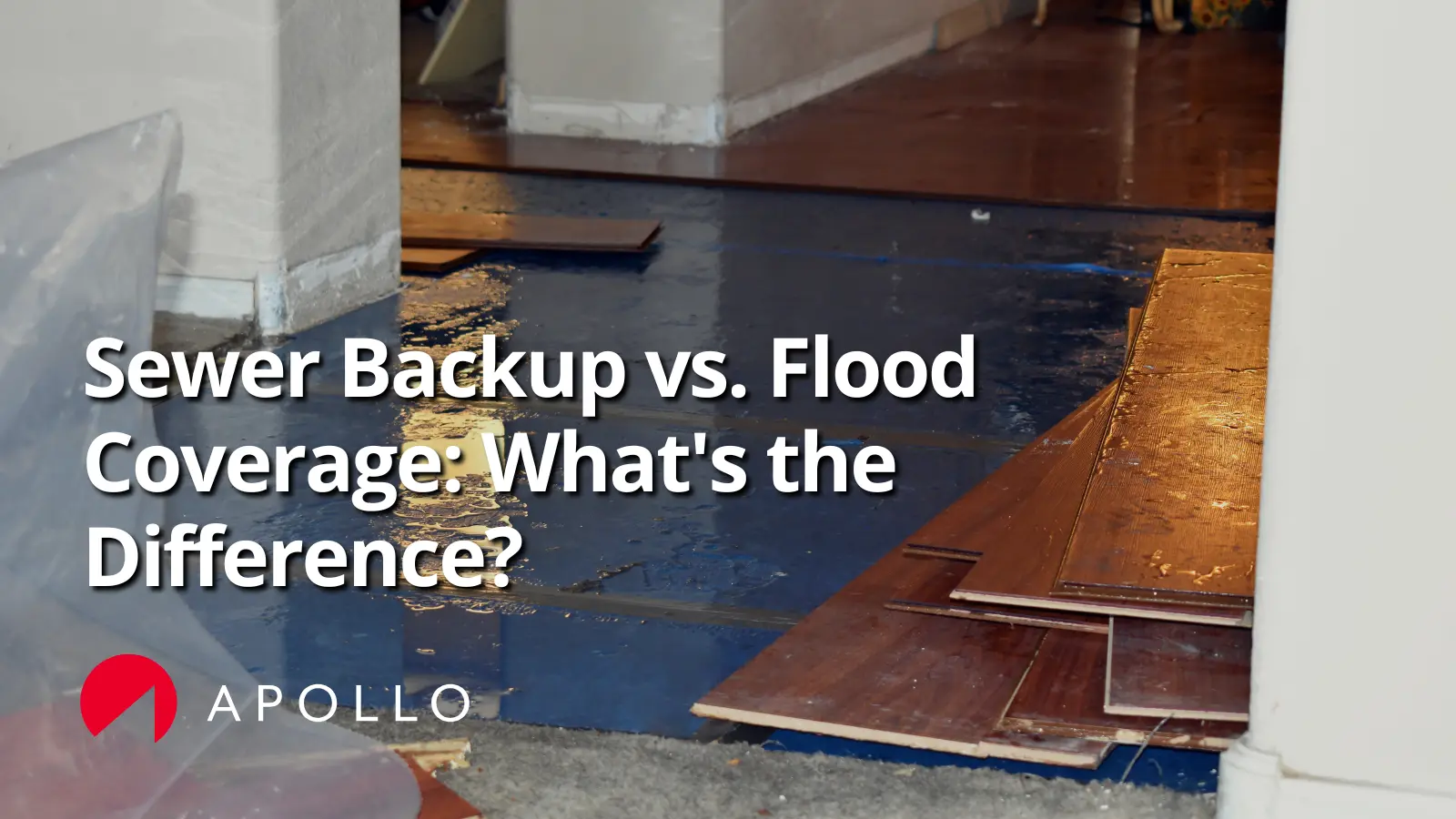
A sewer backup happens when water or waste reverses course inside a building's own drainage system – moving back up through a drain, toilet, or similar fixture rather than away from it.
This type of backup is often connected to a blocked municipal line, a storm drain overwhelmed by heavy rain, or a sump pump that isn't able to keep pace with the volume of water it's handling.
Because the water originates from within the plumbing system rather than from outside the building, this type of incident tends to be treated as a distinct category from water entering through the ground or exterior.
Overland Water (Flood) Coverage
A flood is generally defined as water entering a property from the outside at ground level, rather than water escaping from an internal source like a burst pipe.
This category is typically framed around water making its way in from outside the structure altogether, rather than something originating within the building's own systems.
Overland water is often connected to torrential rainfall, rapid snowmelt, a nearby lake or river rising above its banks, or water pooling on a street and making its way toward a building's lower levels.
It's worth noting the related but separate concept of underground seepage. Water gradually working its way through foundation walls from below ground is often treated differently than surface water flowing in from above, even though both are sometimes grouped loosely under the idea of "flooding."
Understanding the different types of water coverage events
Still need a clearer understanding of the difference between these two types of water events? Here’s a side-by-side breakdown of what you should know.
Factor | Sewer Backup | Overland Flooding |
Source | Usually inside the building’s own plumbing system | Outside of the building, often at ground level |
Normal trigger | Often connected to a blocked line, an overwhelmed municipal sewer, or a sump pump failure | Often connected to heavy rainfall, rapid snowmelt, or a nearby waterway rising above its usual level |
Rate of escalation | Can happen fairly suddenly once a blockage or failure occurs | Can build gradually as water accumulates, though sudden events also happen |
What to look for | Water surfacing through a drain, toilet, or floor fixture, sometimes with an odor | Water entering through doors, window wells, or foundation gaps |
Tenant insurance | Not always included as part of standard water coverage. You may need to upgrade to enhanced coverage for them to be included. | Not always included as part of standard water coverage. You may need to upgrade to enhanced coverage for them to be included. |
Most tenant insurance providers let you upgrade water coverage, which typically extends to situations like sewer backups, overflows, or seepage. These usually fall outside what a standard policy covers. Coverage details and limits vary by provider, so it's worth checking what is or isn’t included by default as part of a policy.
The information provided on this page is intended for general educational purposes only and does not constitute insurance advice, a recommendation, or an offer to sell insurance. Every individual's insurance needs are unique and depend on personal circumstances. We encourage you to consult with an independent licensed insurance broker in your province who can assess your specific situation and recommend appropriate coverage.
Originally published August 5, 2026, updated August 5, 2026
Back to APOLLO MagazineAbout the author

Simon Edmonds, Senior Writer
Tenant Insurance Starting at $13/month
The only tenant insurance provider with a Best Price Guarantee. Already have a policy or quote? We’ll beat the price. Guaranteed. Terms apply.
Get a free quote
4.7 rating
Tenant Insurance Starting at $13/month
The only tenant insurance provider with a Best Price Guarantee. Already have a policy or quote? We’ll beat the price. Guaranteed. Terms apply.
Get a free quote
4.7 rating
Relevant articles





Getting Insured is As Easy As 1 - 2 - 3

1
Tell us (very little) about yourself
Just tell us your address, your name, email and phone number. And that's it. We'll give you a price in less than a minute.

2
Pay online easily and securely
You can choose to pay monthly or save money by paying for the entire year in one easy payment.

3
Get your documents in your inbox - instantly
As soon as you complete your purchase, you'll find your proof of insurance and policy documents waiting for you in your inbox.
Get covered today - it couldn’t be easier
We’ve provided more than 1,000,000 quotes to Canadians just like you. Give it a try!