



Understanding Tenant Insurance Coverage for Wildfires

Written by Simon Edmonds, reviewed by Marco Andolfatto
This guide is part of our series on fire damage and tenant insurance.
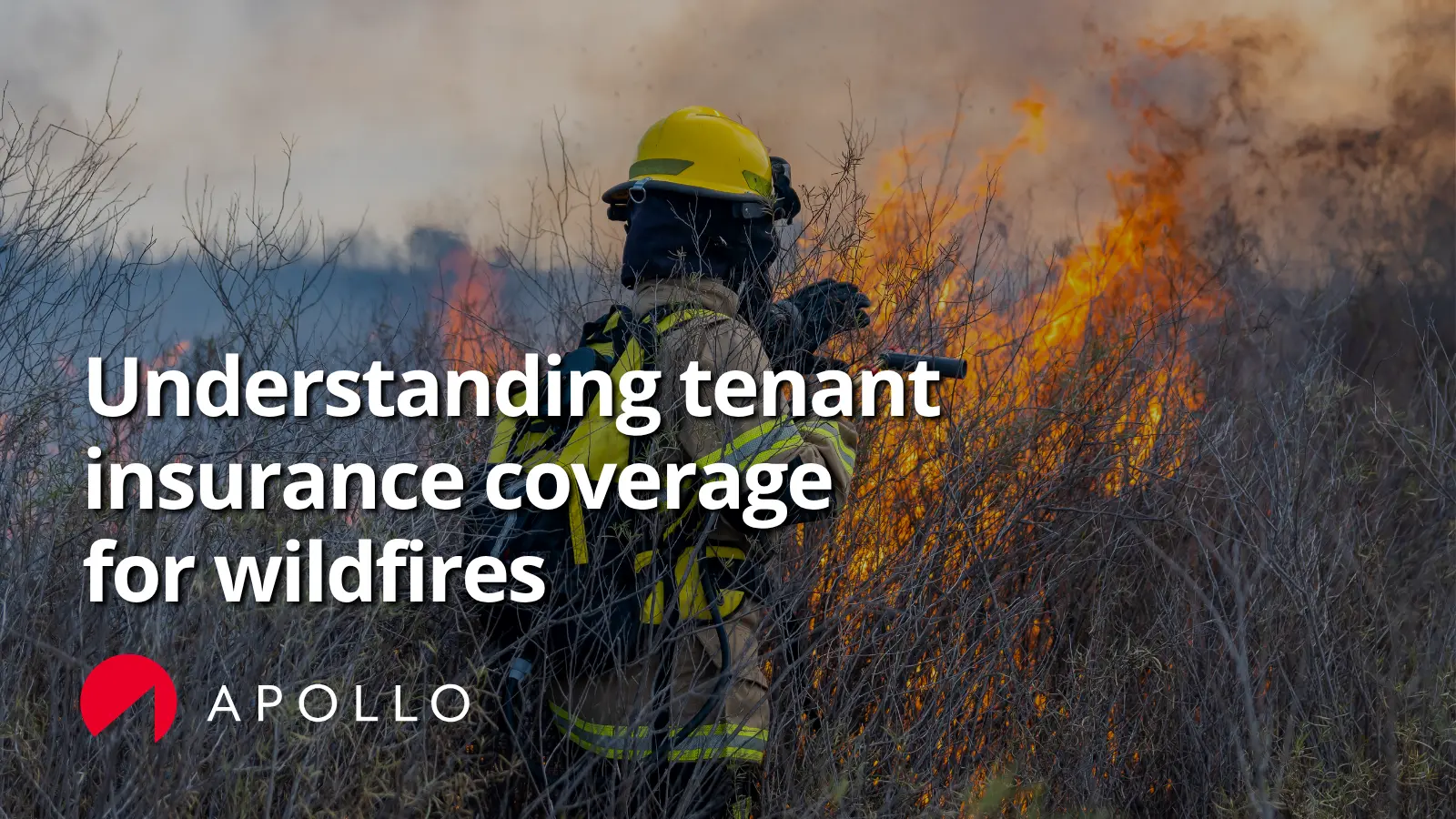
Wildfires can affect a rented unit directly through flame or smoke damage, or indirectly, by forcing a temporary evacuation before any physical damage occurs. While both can have a huge impact on renters, tenant insurance approaches these two situations differently.
If you’d like to understand more about how a tenant insurance policy works after a wildfire, read on to discover what may or may not be covered, and how support from a policy can help you financially if you’re impacted.
Is a wildfire a covered peril?
A wildfire is generally categorized alongside other fire-related perils under a tenant insurance policy, though how it's treated can depend on a few factors:
Whether the policy recognizes fire broadly as a peril, which wildfire is often grouped under
Whether the property's location is considered to carry a higher degree of wildfire exposure
Whether any location-specific terms or conditions apply as a result of that exposure
Because these details can vary between insurers and regions, whether a wildfire is treated as standard or subject to additional conditions tends to depend on the specific policy involved. For that reason, it’s important to understand exactly what your policy does or doesn’t cover.
How does tenant insurance work after a wildfire?
When a wildfire affects a rented unit, or leads to an evacuation, the process tends to follow a broadly similar pattern to most other kinds of fire-related claims:
The situation is reported to your insurer. First contact with your insurer or insurance broker typically covers whether the claim involves direct fire or smoke damage to the unit and belongings, an evacuation order from local authorities, or both. It's also common for an insurer to ask about the timeline – when the evacuation order was issued or lifted, and when any damage was discovered – since this might affect which parts of the policy apply.
Documents are gathered. This generally includes photos or video of any visible damage, copies of official evacuation notices or alerts, and a record of affected belongings (receipts, photos, or a general inventory where receipts aren't available). If you incurred extra costs during an evacuation, like temporary accommodation, meals, or transportation, those receipts are typically part of this step too, since they may relate to Additional Living Expense (ALE) coverage.
Your claim is assessed. An adjuster typically reviews the documentation to determine what losses are connected to the wildfire, how the timeline lines up with the evacuation order or fire event, and how each element relates to the specific terms and limits of the policy. This is usually where distinctions are drawn. For example, between direct property damage, smoke-related damage, and expenses tied to displacement.
A resolution is reached. Based on that assessment, outcomes can include repairs to the unit, replacement or reimbursement for damaged belongings, and coverage for eligible additional living expenses incurred during an evacuation. The specific mix depends on the policy's terms and what the assessment found.
Remember, every insurer’s claims system is going to be unique. Make sure to understand the full ins and outs of how your policy works as soon as you begin your claim.
ALE coverage after a wildfire
If a wildfire results in a rented unit becoming temporarily unlivable, ALE coverage will usually kick-in. This part of your tenant insurance is designed to help you afford expenses which stretch beyond the normal amount you’d expect to pay every month. This can include things like:
Temporary accommodation while the unit is unsafe to occupy or access
Hotel fees during your displacement
Additional commuting expenses if you move further away from your work or a child’s school
Meals above what would normally be spent, if a usual kitchen isn't available
Costs connected to pet boarding, if a temporary living situation doesn't accommodate pets
Other incidental costs directly tied to the displacement itself
Remember, the amount you might be covered for is only what you can expect to pay on top of your normal expenses. For example, your full rent amount won’t be covered, and you’ll be paid for the extra mileage as part of your commute.
What might not be covered after a wildfire?
A few situations tend to fall outside what's generally included under this type of coverage:
A voluntary decision to relocate before any official evacuation order or connection to direct wildfire activity
Damage to a vehicle, which is typically addressed under a separate auto policy rather than tenant insurance
Costs connected to landscaping or outdoor items not considered part of the rented unit itself
Situations where a policy includes specific conditions or limits tied to wildfire exposure in a given area
Every situation will be unique. If you’re not sure whether the circumstance you’ve experienced is going to be covered under a tenant insurance policy, speak to a provider or insurance broker.
The information provided on this page is intended for general educational purposes only and does not constitute insurance advice, a recommendation, or an offer to sell insurance. Every individual's insurance needs are unique and depend on personal circumstances. We encourage you to consult with an independent licensed insurance broker in your province who can assess your specific situation and recommend appropriate coverage.
Originally published August 14, 2026, updated August 14, 2026
Back to APOLLO MagazineAbout the author

Simon Edmonds, Senior Writer
Tenant Insurance Starting at $13/month
The only tenant insurance provider with a Best Price Guarantee. Already have a policy or quote? We’ll beat the price. Guaranteed. Terms apply.
Get a free quote
4.7 rating
Tenant Insurance Starting at $13/month
The only tenant insurance provider with a Best Price Guarantee. Already have a policy or quote? We’ll beat the price. Guaranteed. Terms apply.
Get a free quote
4.7 rating
Relevant articles





Getting Insured is As Easy As 1 - 2 - 3

1
Tell us (very little) about yourself
Just tell us your address, your name, email and phone number. And that's it. We'll give you a price in less than a minute.

2
Pay online easily and securely
You can choose to pay monthly or save money by paying for the entire year in one easy payment.

3
Get your documents in your inbox - instantly
As soon as you complete your purchase, you'll find your proof of insurance and policy documents waiting for you in your inbox.
Get covered today - it couldn’t be easier
We’ve provided more than 1,000,000 quotes to Canadians just like you. Give it a try!