



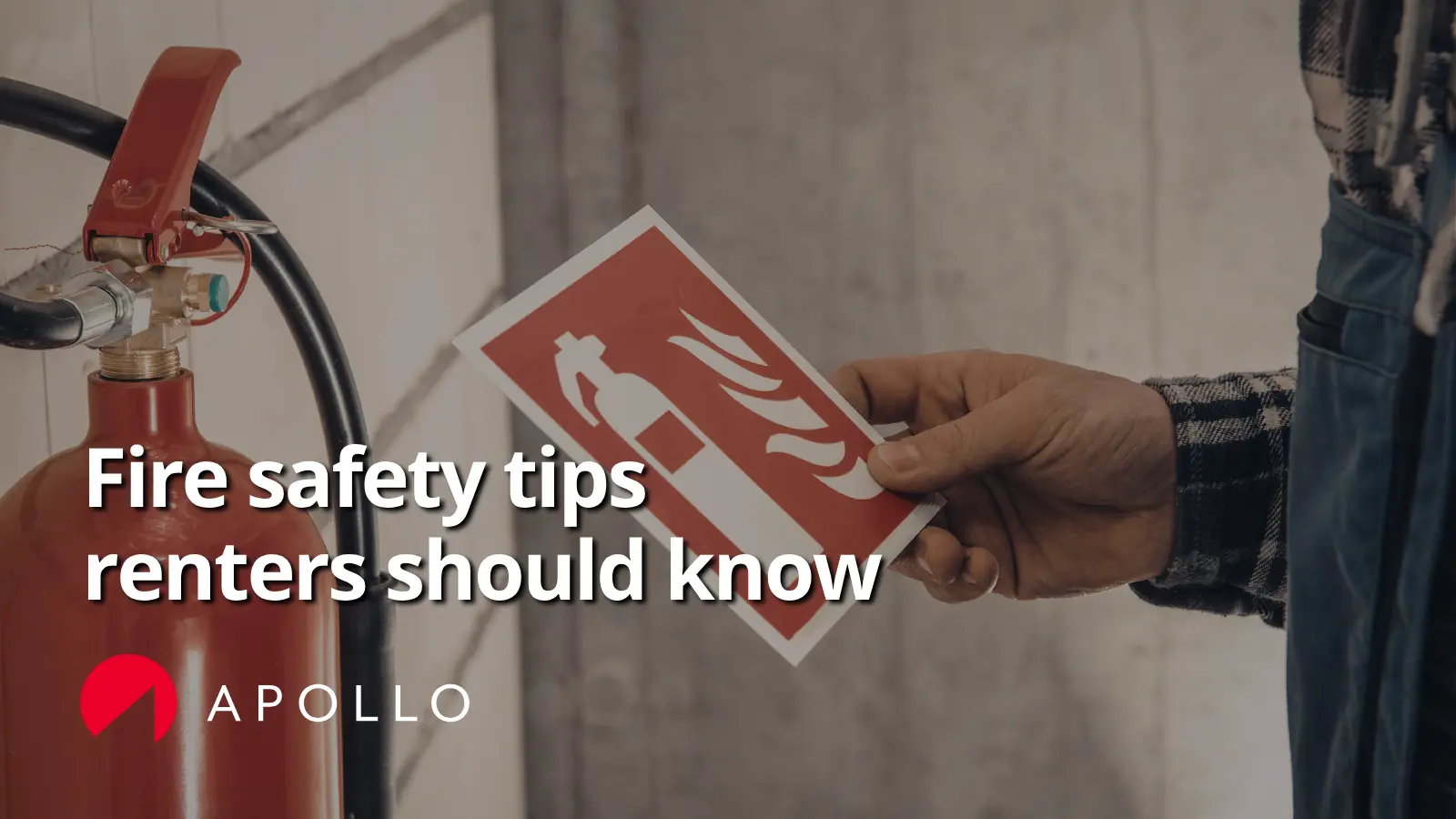
5 Fire Safety Tips Renters Should Know

Written by Simon Edmonds, reviewed by Marco Andolfatto
This guide is part of our series on fire damage and tenant insurance.
Fires in a rental unit can be triggered by things like oil spills when cooking or faulty electrical appliances. While it’s impossible to completely prevent them from happening, a few practical habits tend to reduce the chances of an incident starting in the first place.
Understanding the most common causes, and how to avoid them, is half the battle when it comes to preventing fires in the home. Here are fire prevention and safety tips for renters, so you’re better prepared heading forwards.
1. Kitchen fire safety
Cooking is a common trigger of house fires. Staying in the kitchen while something is on the stove, keeping flammable items like towels or packaging away from burners, and keeping the stovetop and surrounding area relatively clear are a smart approach. Grease fires in particular can behave differently than other kitchen fires, so keeping a lid nearby to smother flames, rather than using water, is generally considered a safer approach.
2. Look out for electrical and appliance hazards
Overloaded outlets, worn cords, and older appliances are common contributors to electrical fires. Avoiding daisy-chained power strips, checking cords periodically for fraying or damage, and unplugging appliances that aren't in regular use can help reduce this type of risk. Space heaters in particular tend to warrant some extra caution, since they're often placed near furniture, bedding, or curtains that can ignite more easily.
3. Make sure smoke detectors and alarms are working properly
Smoke detectors and fire alarms are one of the best ways to catch a fire early, giving you more time to react. Testing detectors periodically and replacing batteries when needed are recommended practices, and checking that a unit has detectors in key areas – near sleeping areas in particular – is worth doing when moving in. If an alarm seems to be missing or not functioning, raise it with your landlord or property manager.
4. Have a basic escape plan
Having an emergency escape plan ready to go can make a difference in the moment. This usually means being familiar with at least two ways out of your unit, keeping hallways and exits clear of clutter, and agreeing on a meeting point outside with anyone else in the household. Running through this plan occasionally could make it easier to follow under pressure.
5. What to Do If a Fire Starts
If a fire does start, getting everyone out of the unit safely should be a priority. Staying low to avoid smoke, checking doors for heat before opening them, and using stairs rather than an elevator are commonly recommended practices in this kind of situation. Once outside and at a safe distance, calling emergency services is the next step, even if the fire seems small or appears to be out. Going back inside for belongings is generally discouraged, since conditions inside a unit can change quickly and unpredictably once a fire has started.
A fire can have a big impact on a rental unit. For those with a tenant insurance policy, some of the financial impacts of that can be mitigated. Tenant insurance kicks-in after a fire to help pay to replace your burned belongings, cover the extra costs of living elsewhere if your home is unsafe or unlivable, and support you with legal costs if you accidentally caused the fire and are facing a lawsuit.
The information provided on this page is intended for general educational purposes only and does not constitute insurance advice, a recommendation, or an offer to sell insurance. Every individual's insurance needs are unique and depend on personal circumstances. We encourage you to consult with an independent licensed insurance broker in your province who can assess your specific situation and recommend appropriate coverage.
Originally published August 14, 2026, updated August 14, 2026
Back to APOLLO MagazineAbout the author

Simon Edmonds, Senior Writer
Tenant Insurance Starting at $13/month
The only tenant insurance provider with a Best Price Guarantee. Already have a policy or quote? We’ll beat the price. Guaranteed. Terms apply.
Get a free quote
4.7 rating
Tenant Insurance Starting at $13/month
The only tenant insurance provider with a Best Price Guarantee. Already have a policy or quote? We’ll beat the price. Guaranteed. Terms apply.
Get a free quote
4.7 rating
Relevant articles





Getting Insured is As Easy As 1 - 2 - 3

1
Tell us (very little) about yourself
Just tell us your address, your name, email and phone number. And that's it. We'll give you a price in less than a minute.

2
Pay online easily and securely
You can choose to pay monthly or save money by paying for the entire year in one easy payment.

3
Get your documents in your inbox - instantly
As soon as you complete your purchase, you'll find your proof of insurance and policy documents waiting for you in your inbox.
Get covered today - it couldn’t be easier
We’ve provided more than 1,000,000 quotes to Canadians just like you. Give it a try!